GoodHolidayStore planning guide
Gentle Caregiver Group Games With No Pressure to Share
Your caregiver group finally found an hour to sit together, and nobody needs another task to get right. Offer one picture game, one quiet alternative and permission to just stay for company. No care stories, no "how are you coping," no contest for most dedicated caregiver.
Let people sit down before you hand out anything
Put chairs where people can settle without walking through the middle of a game. Greet each person before offering a sheet. Someone who arrives late may want to listen first; someone who has been looking forward to conversation may want a seat beside a familiar face.
Try this invitation: "There's an optional picture game today. You're welcome to play, watch or just sit with us." Say it to the whole room so nobody needs to request an exception. Don't follow a pass with "Are you sure?"
If you're adding this social to an established support meeting, agree the boundary with the facilitator first. Leave the planned support time intact. A game can fill a social gap, but it shouldn't crowd out the reason people came.
Offer three ways to join
You don't need to guess how everybody feels. Show the choices, explain what each involves and let people decide. Avoid a show of hands about who is tired or struggling; that turns a practical choice into an unwanted disclosure.
| If people want? | Offer? | Your hosting job |
|---|---|---|
| A shared activity without personal answers | Picture bingo | Call and show each picture |
| A gentle conversation in pairs | An unscored choice game | Explain that passing is welcome |
| Company without playing | A comfortable seat nearby | Include them in the welcome |
Family Caregivers Bingo has 50 different player-card arrangements and 36 matching calling pictures. The set includes Helping Hands, Home and Care Bag, alongside care-related objects such as a Pill Organizer. Look through the theme before the meeting; familiar imagery may feel welcome to some people and too close to their day for others.
Get one bingo round ready first
Print for the people coming
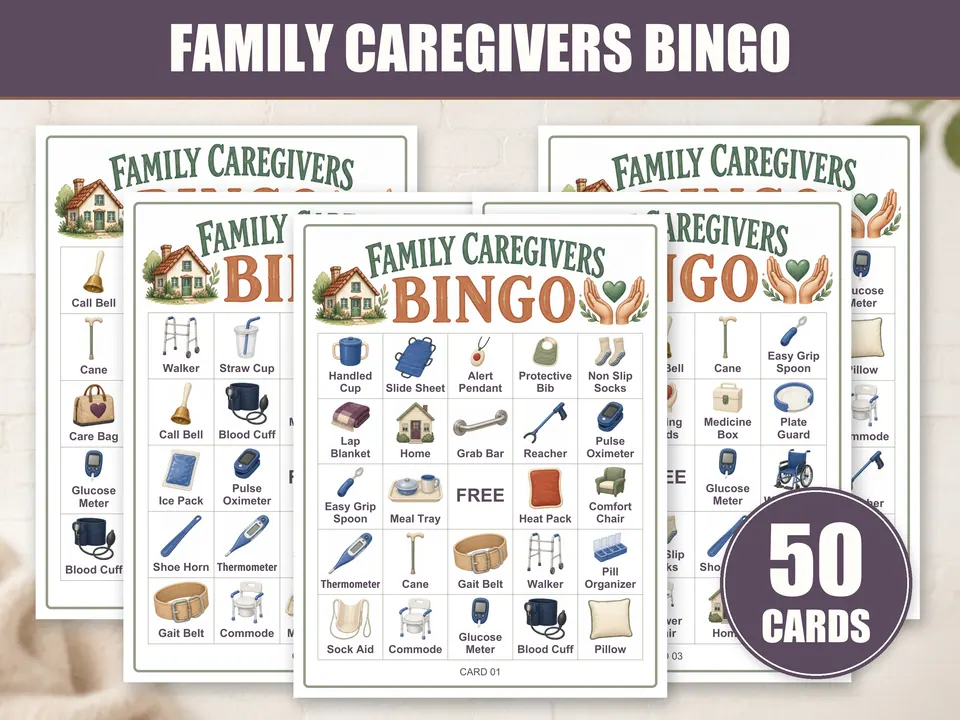
Choose US Letter or A4 and one-per-page or two-per-page. These are four editions of the same 50 cards, so you only need one edition. Print different player cards for those joining, rather than the entire file by default. Make a sample first and ask whether the pictures and labels are comfortable to see at the table.
Finish the cutting before the welcome
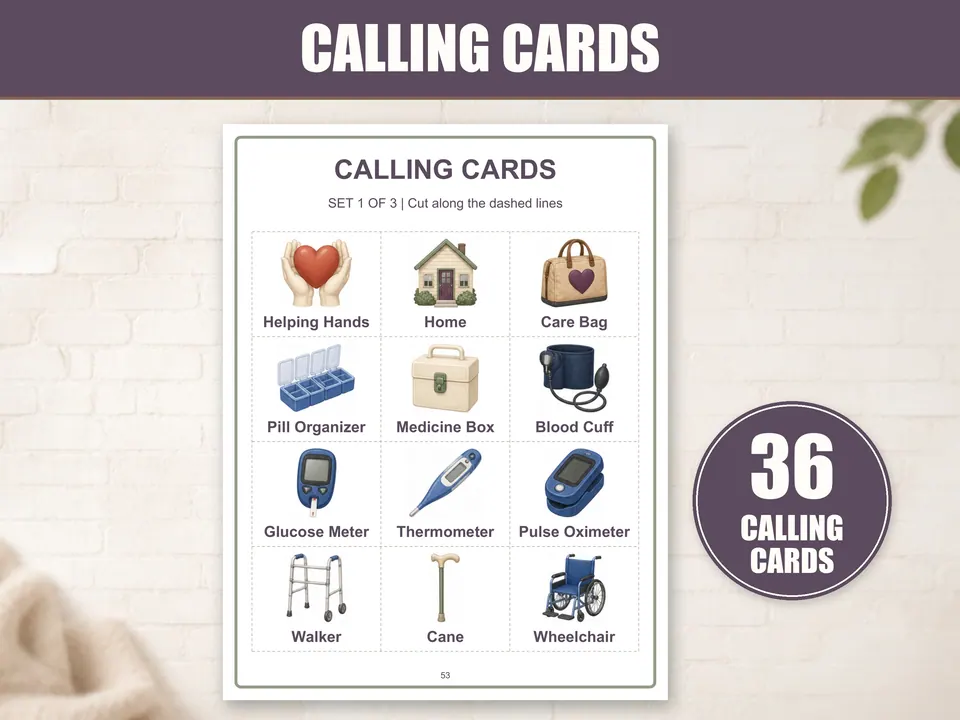
Prepare all 36 calling cards and the checklist. Put removable markers within reach, with enough for every player. The included sheet contains 36 tokens for one player; print extra sheets or supply your own suitable markers. Keep the caller's drawn cards separate from the unused pile so checking a win stays simple.
Explain the pattern and take the first call slowly
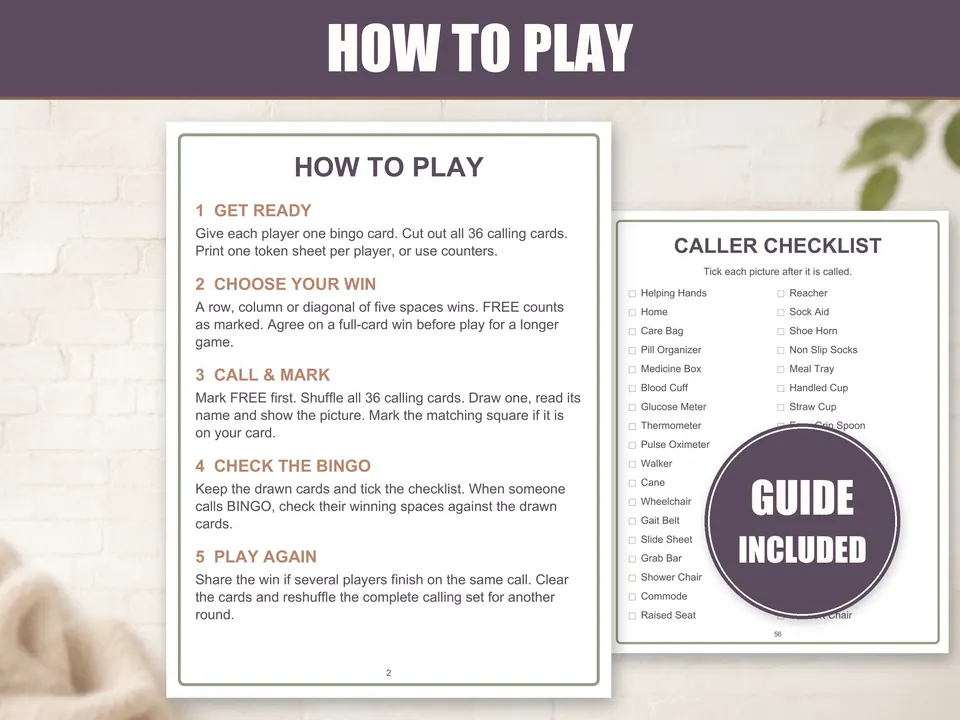
Mark the FREE center and agree on a row, column or diagonal before you begin. Shuffle the complete calling set, read the exact label and show the picture. Pause while people look. Check a claimed pattern against the drawn cards and share simultaneous wins. Clear boards and reshuffle all calls if the group wants another round.
Reserve about 20 minutes. Tell people when the gathering will end. If time runs out before a winning pattern, thank everyone and close without rushing through the remaining calls.
Want to talk instead? Start in pairs
The Family Caregivers Month bundle contains 25 games, a contents page and a quick host guide. Its Would You Rather game asks players to pick a choice and compare answers with their table, with no scores. That's a more comfortable starting point than asking a new group to perform charades.
Read the selected game before printing. The bundle also contains timed and scored games, so "25 games" doesn't mean every page fits a gentle support-group social. Pick deliberately. Bring only the chosen player pages and keep any answer keys with you.
For the largest text, choose a full-page edition. The bundle supplies US Letter and A4, plus a two-up version of each. It is a digital download; paper, pens and other physical supplies are your responsibility.
If two people want to compare choices privately, give them space to do that without reporting back. You can invite a shared answer afterward, but don't go around the circle calling on everyone. A comfortable conversation doesn't need a public finish.
The free option: three either-or questions
Write these original choices on ordinary paper: "A window seat or a garden bench?" "A familiar song or a quiet room?" "A warm drink now or a short walk later?" Invite people to choose one pair, answer if they wish and ask a neighbor the same question.
These are separate host prompts, not pages from the purchased bundle. There are no scores or right answers. Someone can point to a choice, say a few words or pass the paper along. You can also read them aloud without printing anything.
Let the conversation wander if people want it to. If a choice doesn't fit someone's circumstances, skip it without asking why. The activity has done its job when it gives people an easy opening, even if you only use one question.
Close early and send them home light
Give a clear closing notice, thank people for coming and leave cleanup to the hosting team. Don't hand out unfinished puzzles as homework unless someone asks to take their own sheet. Keep purchased digital files with the organizer and follow the listed use terms.
Before the next gathering, ask one small question: "Would you like a game again, or more open conversation?" A short answer is enough. You aren't measuring anyone's mood or progress. You're learning how to make the next welcome feel easier.
Questions and answers
Can someone attend without playing?
Yes. Offer a seat and the same warm welcome to anyone who watches, chats or leaves early. Say this out loud before you hand out cards so nobody has to ask.
Does picture bingo require caregiving knowledge?
No. Players just match the picture the host shows to their board, with no written quiz. Look through the care-related pictures first, since some members may find them close to home.
Do I need all 50 bingo cards?
Print only the different player cards you need, plus the full calling set and checklist. Supply enough removable markers for each player.
What can I do without buying a printable?
Read the three original either-or prompts on this page and let people answer in pairs or pass. You only need your voice or ordinary paper.