GoodHolidayStore planning guide
Home Care Staff Thank-You When Nobody Shares a Break
Your home care team is scattered across visits, offices and finish times, so one lunchtime party will miss half of them. Run the same small session two or three times, with a ready-made game kit and a personal thank-you at each stop. Nobody drives back for a game.
Map who can be where, then pick the game
Start with where people already pause: an office check-in, a scheduled team gathering or a local base between visits. Ask each location for a workable window and a willing host. Put the session inside that window instead of expecting staff to find extra travel time.
Make a short list of who each session can reach. Include coordinators and support colleagues as well as visiting staff. Then identify the people whose schedules miss every window. They need a thank-you too, even if their appreciation moment doesn't involve a game.
Keep the invitation concrete: "Optional staff thank-you break at the office, with a picture game if you'd like to join." Include the start and finish. Plan on about 20 minutes.
Make every session feel equally planned
Set a consistent level of recognition across sessions. If one group gets a personal note and another finds leftover game sheets, the second group won't feel equally considered. Prepare notes and materials together, then label them by session.
| Staff situation | A practical invitation | What to prepare |
|---|---|---|
| Several colleagues at one base | A hosted bingo round | Cards, markers and a caller |
| Two colleagues with a shared break | An unscored choice game | Selected pages and pens |
| Colleague misses every session | A direct personal thank-you | A note and a later invitation |
Avoid a combined leaderboard across sites. Different group sizes and interruptions make comparisons awkward, and appreciation doesn't need a location to come last. You can share the theme while letting each group enjoy its own round.
Pack a bingo kit anyone can run cold
Count players at each session
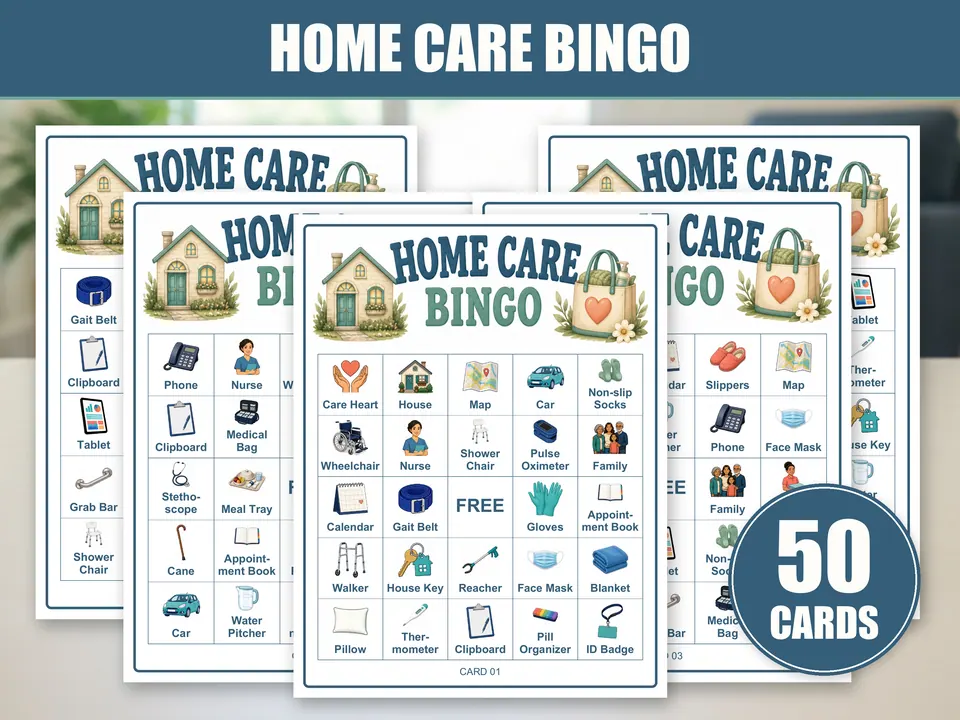
Home Care Bingo includes 50 predesigned player cards and four PDFs: US Letter and A4, each in full-page and two-per-page layouts. Choose one edition and print different cards for each group. The full-page files contain 58 pages; the two-per-page files contain 33. Those totals include support pages, so print selected pages rather than assuming you need the whole file.
Put a complete calling set in every local kit
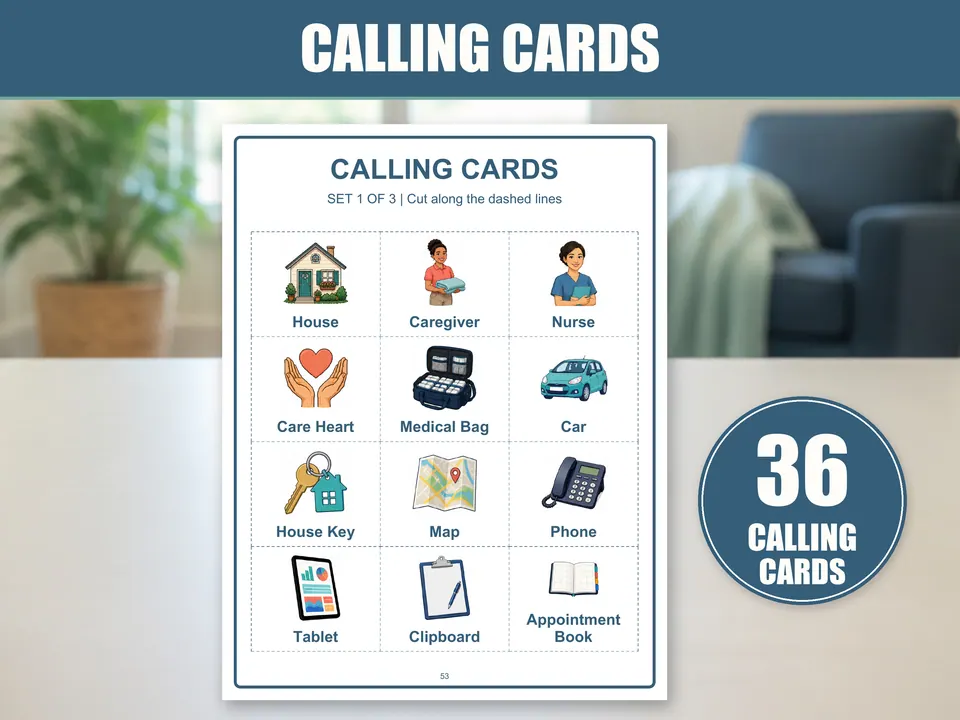
Each simultaneous gathering needs a host, all 36 calling cards and a checklist. Cut everything before packing it. Add the host guide and a short cover note with your planned finish time. Keep the purchased digital file with the organizer; prepare printed materials rather than forwarding the PDF around the team.
Supply markers and a reset envelope
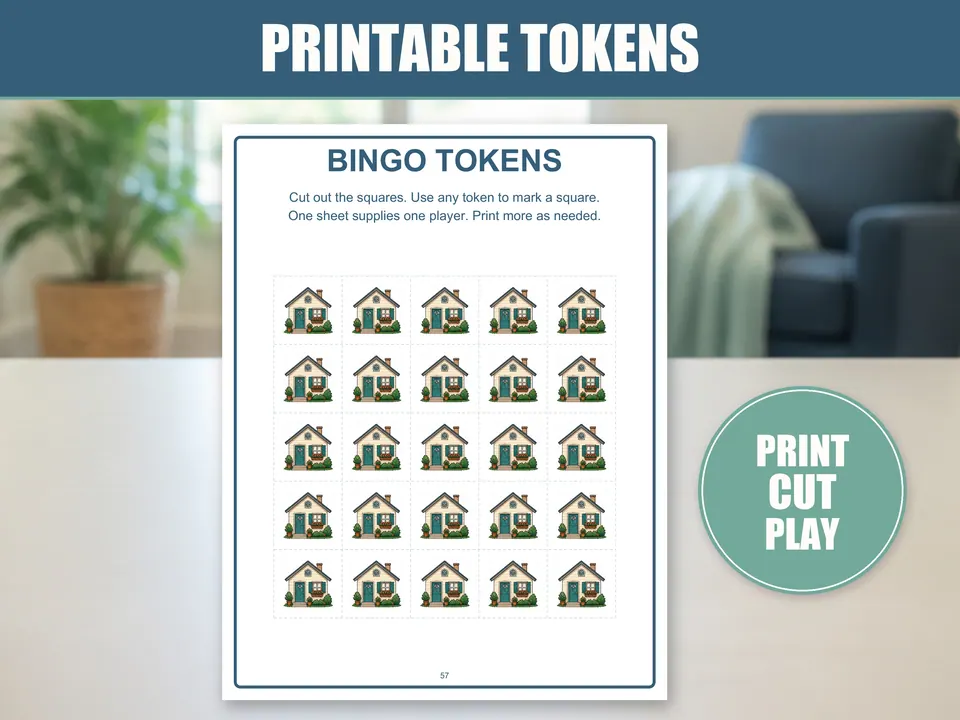
The full-page edition's token sheet has 25 markers; the two-per-page edition's has 50. Print enough for your players or supply suitable removable markers. Add an envelope marked "complete calling set" so the host can reunite all 36 cards afterward. Player cards and markers should be ready before people arrive.
At the table, mark the FREE center and agree on a row, column or diagonal. Shuffle the calls, read each label and show its picture. Keep drawn cards together and check every square in a claimed win against them. Share simultaneous wins, then clear boards and reshuffle the entire set before another round.
The game works when someone can sit down and understand the next call without a long briefing. It stalls when the host is still cutting cards while colleagues' break time disappears. Pack the kit as if you won't be there to explain it.
Two people at a base? Use a conversation sheet
At a small base, a conversation sheet may fit better than a hosted group round. The Home Care Month bundle has 25 games, a contents page, a quick host guide and answer keys for objective games. Its Would You Rather activity is unscored: choose answers and compare them with your table.
Print just that game's player page for a pair who wants it. The bundle includes four PDF editions; the full-page Letter and A4 versions each have 53 pages, while each two-up version has 27 landscape sheets. Full-page editions give the largest text. Read the chosen game's own instructions before offering another format.
The bundle also includes Silly Story Fill-In, whose instructions say to invent everything and use no real client details. Carry that approach into all your hosting. Don't ask for stories from visits as an icebreaker or display anecdotes that identify clients.
For a free alternative, ask each pair to write one everyday preference on scrap paper: "music on the journey or a quiet journey?" They can compare answers without scoring. This is an original host activity, separate from the purchased pages. Only offer it when colleagues are safely stopped and on a suitable break.
When someone gets called away mid-round
Agree what happens when someone leaves before you start. They can leave their card and return if the same round is still running; the host can show the drawn calls so they can catch up. If that feels like work, offer a fresh start in the next round instead.
Don't hold the whole table indefinitely while waiting for one person's return. Equally, don't call across the room for them to hurry. A staff social should fit around the agreed work arrangements, with no explanation required for stepping away.
Close with a direct thank-you that includes visiting and office roles. Afterwards, check your original reach list and follow up with people who missed the sessions. Ask local hosts what they needed but didn't have, then store complete printed kits for next time. The most useful feedback may be as simple as "send more markers."
Questions and answers
Can we run this across several locations?
Yes, with repeated local sessions and a printed kit at each base. The products are licensed for personal or single-workplace use, so if your locations are separate workplaces, check the listing terms before you copy kits across them.
Can staff play while travelling between visits?
Offer activities only when staff are safely stopped and have an appropriate break. Repeated sessions and personal notes help include people without adding travel.
Does every location need the whole bingo file?
Each hosted group needs selected player cards, the complete 36-card calling set, a checklist and enough markers. You do not need every player card for a small gathering.
What if someone misses every game?
Give them the same personal thank-you and a clear invitation to a later session if one is planned. Recognition should not depend on attendance.