GoodHolidayStore planning guide
Hospice Staff Appreciation That Stays Quiet
You want to thank your hospice colleagues, but a loud party or public speeches would feel wrong. Offer a quiet gathering with personal notes, comfortable chairs and an optional picture game. The team sets the volume. Nobody has to share a hard day or look cheerful to be thanked.
Write an invitation that promises very little
Describe exactly what you're offering: a staff appreciation pause, a seat, a personal thank-you and an optional activity. Give a start and finish so people can decide how it fits their day.
Check the plan with the person responsible for the team's schedule. Twenty minutes is a good target, but actual availability comes first. If some colleagues cannot attend, arrange the same recognition separately rather than treating them as an afterthought.
Be equally clear about leaving. "Come for whatever part suits you" gives people a way to step in briefly. Set out notes where the host can hand them over quietly, without requiring each recipient to stand up or speak.
Check whether a game belongs today
Ask a team contact whether an optional game would be welcome. Then preview the actual theme yourself. Hospice Bingo uses care-team and comfort imagery; its 36-picture calling pool includes care heart, caregiver, nurse, volunteer and family. Some staff may welcome familiar pictures. Others may prefer a break from work-related themes.
You can leave the printed kit unopened. That isn't a failed event. If the group wants quiet conversation, let the chairs and the welcome do their work. Have a simple alternative ready so the choice doesn't become "play or leave."
| What the team wants | Your plan | What you can leave out |
|---|---|---|
| A small shared activity | Optional hosted picture bingo | Speeches and a leaderboard |
| Quiet company | Seating and personal notes | Game materials |
| A brief visit | A direct thank-you | A requirement to stay |
The printable is a social picture-matching game with no written quiz or individual answer sheet. Present it that way. Don't turn the pictures into discussion prompts about patients, families, loss or professional resilience. Those conversations need their own purpose and appropriate setting.
Set the table before anyone walks in
Select a comfortable card layout
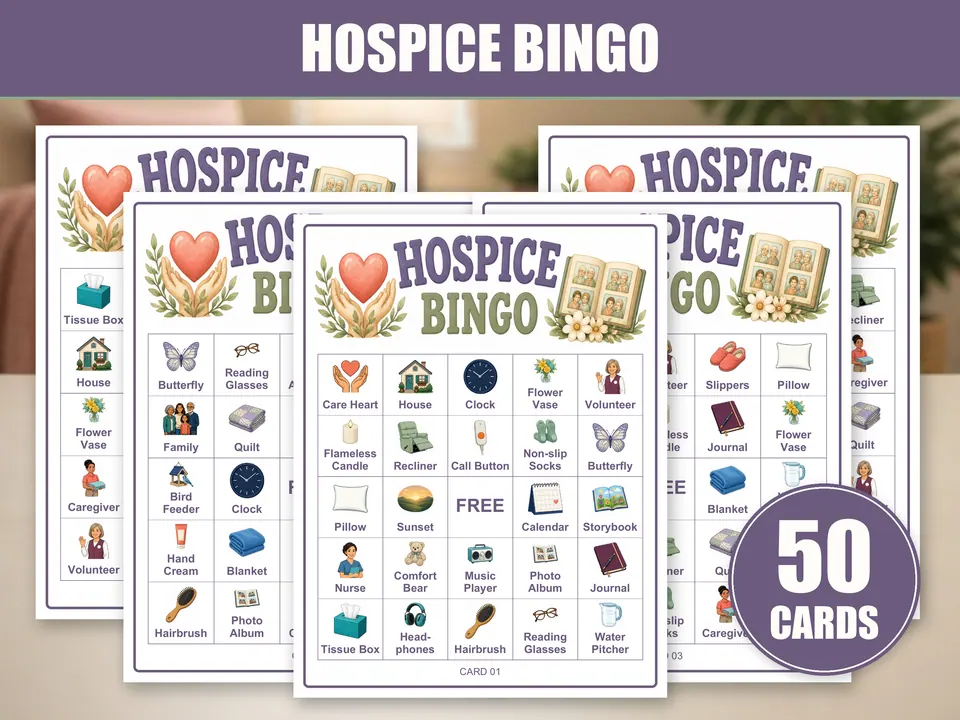
The set includes 50 predesigned player cards with a center FREE space. Choose US Letter or A4, then full-page or two-per-page. All four PDFs contain the same 50 boards. Print a sample and look at it from a seated position before producing the cards you need. Offer the larger layout when that is more comfortable to read.
Give the host a complete set
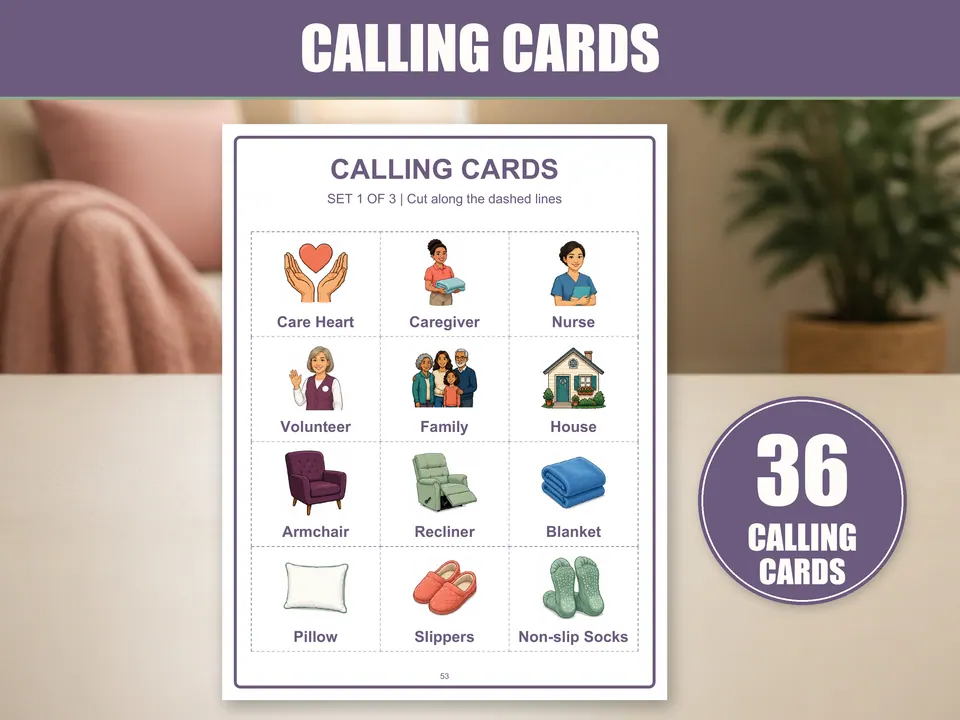
Cut all 36 calling cards and include the checklist and host guide. Keep the draw pile away from the used calls, with enough table space to check a claimed pattern. Do this preparation beforehand so the gathering can begin with a welcome instead of a request for help cutting pages.
Put enough removable markers within reach
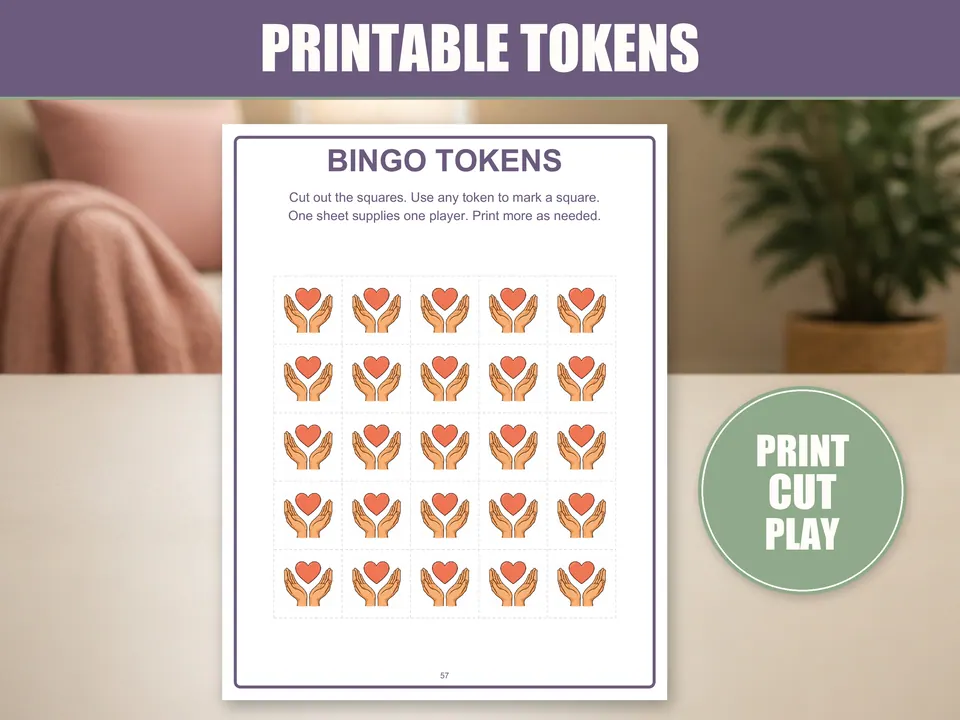
The full-page edition has 25 markers on its token sheet; the two-per-page edition has 50. Print additional sheets as needed or provide suitable removable markers. Set them beside each card so players can settle without reaching across one another. Physical supplies are not included with the digital download.
The full-page PDFs have 58 pages each; the two-per-page versions have 33. These totals include the supporting pages, not just player boards. Choose the edition matching your paper, print at Actual Size or 100%, and make only the player and support copies your gathering needs.
Call softly and end on time
Before drawing a card, mark the FREE center and agree on a winning pattern. A row, column or diagonal gives everyone one clear thing to look for. Shuffle the complete calling set, read the exact label and show the picture. Leave enough time for people to look at their cards before the next call.
Keep the drawn calls together and track them on the checklist. Check every square in a claimed winning pattern against those calls. Share simultaneous wins. If the group asks for another round, clear the boards and reshuffle the entire 36-card set first.
There is no need to raise the volume or build suspense. A calm "Let's check that row together" is enough. If a colleague steps away, let them choose whether to catch up from the drawn calls or sit out the rest of the round.
Give a closing notice and stop at the promised time, even if nobody has won. Thank the group and let the unfinished round go.
The free version: one honest note each
Give each colleague a short personal note on ordinary paper. Start with something you can honestly recognize: "Thank you for making time to help me with the handover," or "I appreciate the care you take when welcoming new colleagues." Write only what you know firsthand.
Keep the note about the recipient's contribution. Avoid patient details, descriptions of difficult cases or assumptions about how someone is coping. If you don't know a colleague well, a plain and sincere thank-you is better than invented specificity.
Offer a blank note for anyone who wants to thank a coworker, with no collection or public reading afterward. People can write privately, take the paper away or leave it untouched. This original activity is free apart from supplies you choose to provide.
Before packing up, make sure absent colleagues have a route to the same recognition. Store reusable printed cards with their complete calling set and keep purchased digital files with the organizer. Your final hosting task is practical: leave the room ready for the people who need it next.
Questions and answers
Does a hospice appreciation gathering need a game?
No. A quiet room, a seat and a personal note can be the whole gathering. Bring the bingo kit, ask your team contact, and only open it if people want something to do together.
Is Hospice Bingo a clinical quiz?
It is a hosted picture-matching game. The caller reads and shows a picture, and players mark matching squares on their boards.
How many people can join the bingo round?
The set has 50 player cards for up to 50 players plus a separate caller. Print selected cards and enough removable markers for your actual group.
What if a colleague would rather sit quietly?
Welcome them on the same terms as players. Offer a seat and their thank-you without asking them to explain or encouraging them repeatedly to join.