GoodHolidayStore planning guide
Nursing Bingo: 6 Steps Before the Break Starts
Your nursing team has a break, and nobody wants to spend it watching you cut paper. Cut the 36 calling cards first, hand out different boards, and agree on one winning line before you start. Picture bingo gives everyone something to do without putting anyone on the spot with a quiz. These six steps take you from the printer tray to a kit the next shift can pick up and run.
Sort the paper before the players
Select one edition and test a page
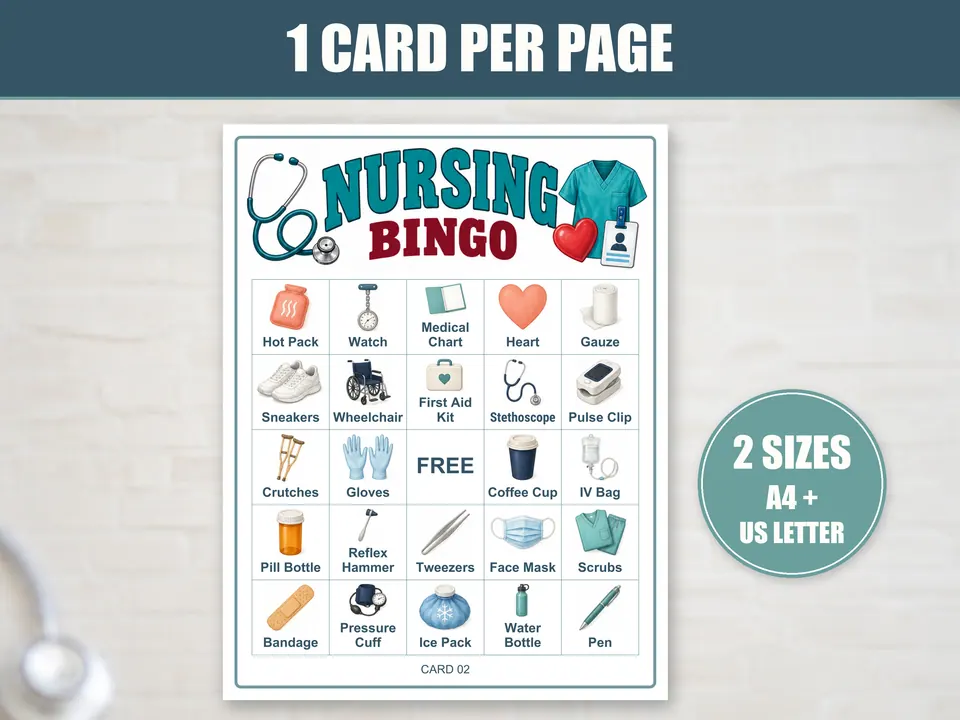
Pick A4 or US Letter to match your paper. Then choose one card per portrait page or two cards per landscape sheet. The four PDFs contain the same 50 boards, so printing all four won't make 200 different cards.
Each full-page PDF has 58 pages; each two-per-page PDF has 29. Print at Actual Size or 100%, single-sided, with Pages per Sheet left at 1. The two-up PDF already pairs the pages. Test one board and look at it from a seated player's distance before you print the whole stack.
This set handles the picture matching for you: the player boards, 36 calling cards and caller checklist belong to the same game. Its nursing essentials include Scrubs, Stethoscope and Nurse Badge, with everyday break-time items in the picture pool too.
Print different boards for the people joining
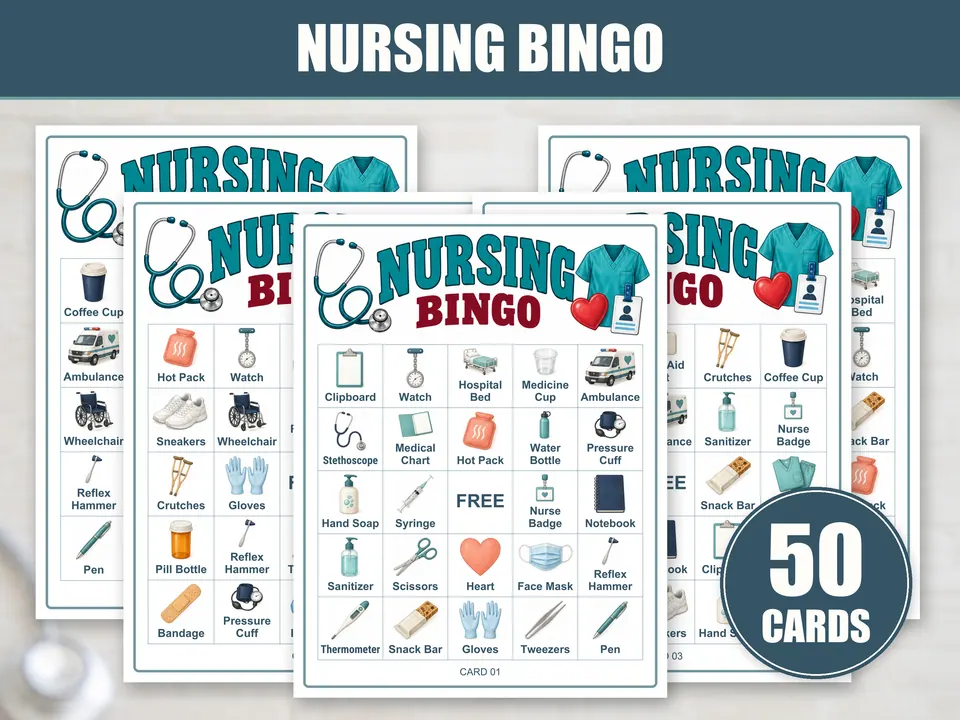
Count who's coming to this sitting, then pick that many different player cards. In the full-page files, the 50 boards sit on pages 3 to 52. In the two-per-page files, they're on sheets 2 to 26; split the paired boards along the center cut line.
Keep spare boards next to the host instead of spreading every copy across the table. A late arrival can take the next unused design without interrupting the caller. If your group needs bigger pictures, go full-page from the start. Ordinary white paper works, and the listing recommends color for the illustrated look.
Give the caller a complete kit
Cut and count calls and markers
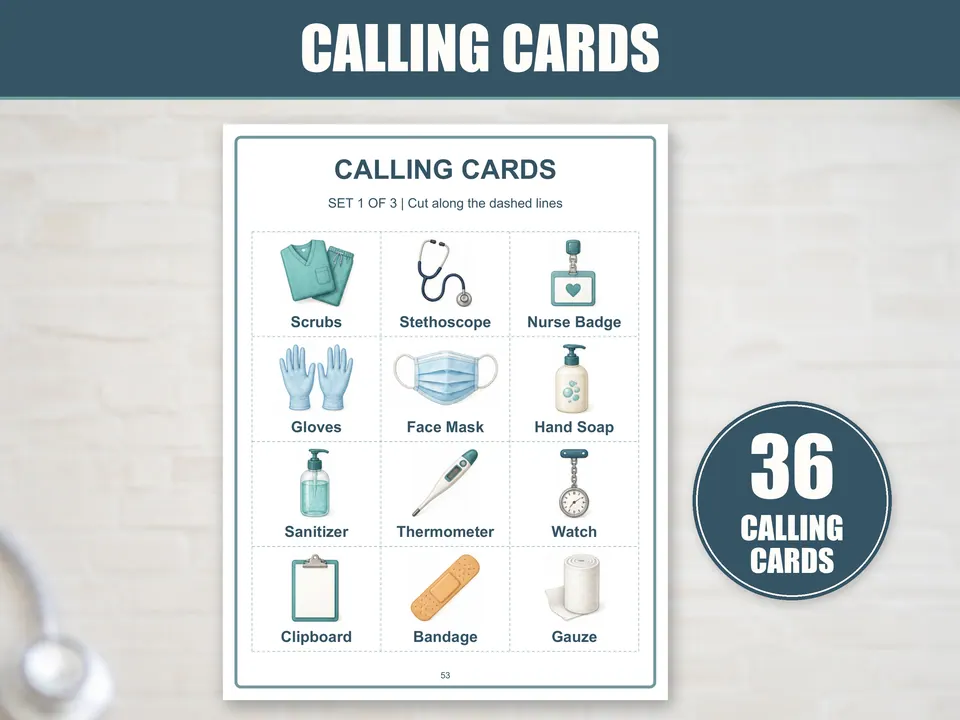
Print the support pages once for the host. Cut all 36 calling cards along their guides, grab the caller checklist, and make two clear spaces: unused calls and drawn calls. Keep every call, even the ones that aren't on your own board.
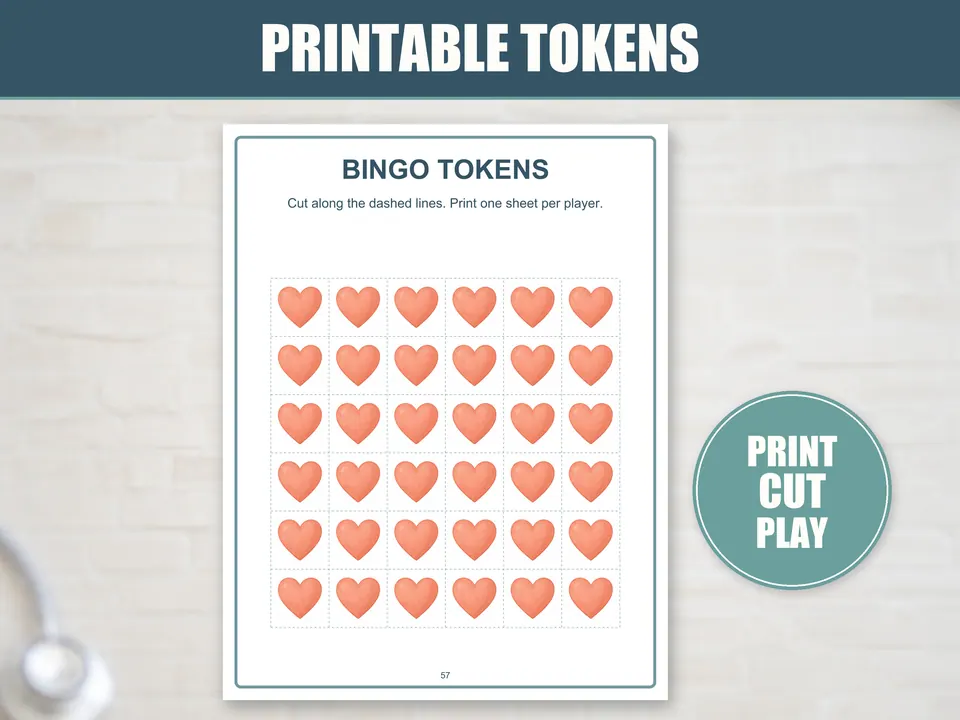
The supplied token sheet has 36 markers for one player. Print extra token sheets for the others, or bring enough removable markers of your own. Cardstock makes calls and tokens sturdier. Put the calling cards in an envelope marked with their count so you can check the kit later in a few seconds.
Seat the caller where everyone can see a held-up picture. Leave a clear patch of table for drawn calls too. It matters more than decorations, because that little pile is your evidence when somebody wins.
Show the pattern, then start
Explain the win while everyone is listening
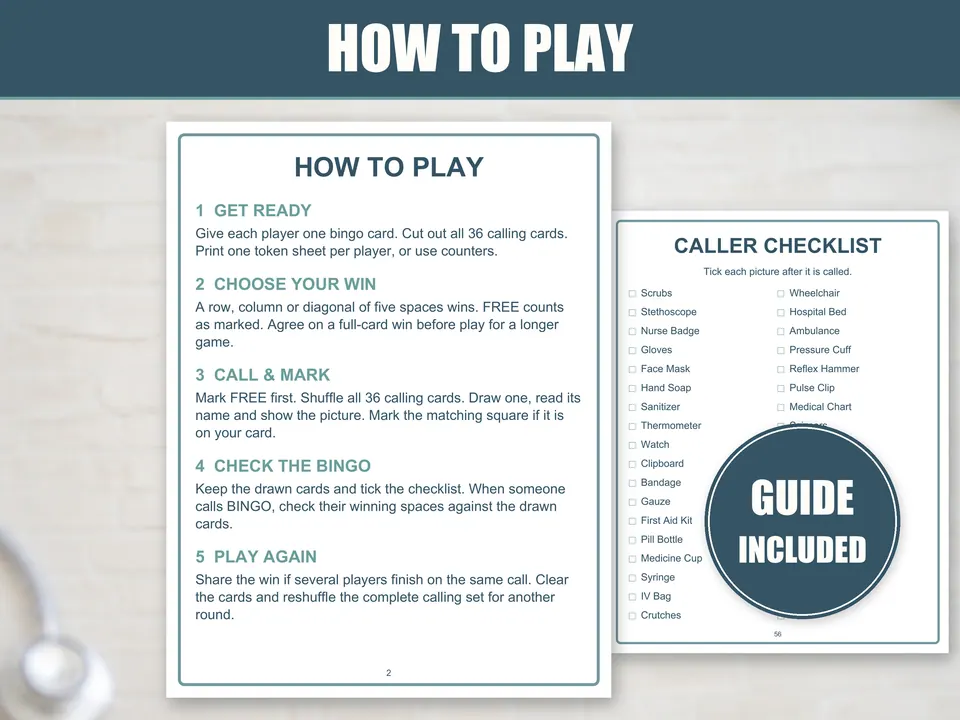
Give each player a board and markers, and have them cover FREE first. Pick a complete row, column or diagonal, or go for a full-card game. For round one, choose a line pattern and show it on a board.
Tell players to mark a picture only after it's called. Explain how to signal bingo and that simultaneous wins are shared. Settle the pattern now, before two people find out they were playing toward different finishes. Anyone who'd rather watch can sit beside a player and enjoy the conversation.
Call clearly and check the claimed line
Shuffle all 36 calling cards. Draw one, read its label aloud and show the picture. Pause long enough for people to find it, put the card in the drawn pile, and tick the caller checklist. Then draw the next.
When someone calls bingo, stop drawing. Check every square in their pattern against the calls already drawn, allowing for FREE. If a square hasn't been called, point it out kindly and carry on. Share simultaneous wins rather than inventing a speed contest. Your drawn pile turns this into a quick check, not a table-wide debate.
Leave a fresh start for the next shift
Clear every board and reunite the calls
Remove the markers and gather all 36 calling cards, including the drawn pile. Reshuffle the full set for a new round. Look under boards and token bowls before you close the envelope; one missing call quietly ruins the next game.
Keep boards, markers, checklist and host guide together. Add a note saying which winning pattern you used and where the spare boards are. The next caller can repeat it or announce a new one. Keep the digital files with the organizer and hand out printed copies for your own group event.
If the break ends mid-round, thank everyone and pack up without dragging out the finish. A fresh game next time is easier to join than a half-remembered board left on the table. For ideas on where to keep the kit, see the healthcare break-room game station.
Questions and answers
Do all four PDFs contain different boards?
No. All four contain the same 50 boards in different sizes and layouts. Pick one edition, then print different player cards within that file.
How many token sheets do I need?
One supplied 36-token sheet serves one player. Print extra sheets for the rest of the group, or provide your own removable markers.
Can we play another round with the same cards?
Yes. Remove every marker and reshuffle all 36 calls together, including the drawn cards, before starting again.