GoodHolidayStore planning guide
Infection Prevention Thanks for Every Shift
The daytime appreciation photo looks lovely. The team arriving later finds an empty snack box and a poster about the party they missed. Build your infection prevention thank-you around one repeatable break-room activity, with fresh pages and a named host for each sitting. Then add a personal message for the people who can't stop at all. Not every shift has to be in one room for the recognition to include them.
Fix the empty-table problem first
Before you pick a game, list the groups you want to reach and ask when each one can realistically pause. Put separate opportunities on the plan instead of writing one lunchtime invitation and hoping it travels. Count the people working away from your main gathering area.
Name a contact for each sitting. They don't have to throw a party. They need to know where the pages are, how the chosen activity works, and who the thank-you is for. If nobody can host a group, leave an individual option and a clear time for returning answers.
Make the recognition visible before the activity starts. A brief note from the organizer can name a specific contribution, like helping another team prepare for an event or answering questions during a busy week. Ask the colleague for the detail. Don't invent a flattering story.
Pick one game from the bundle
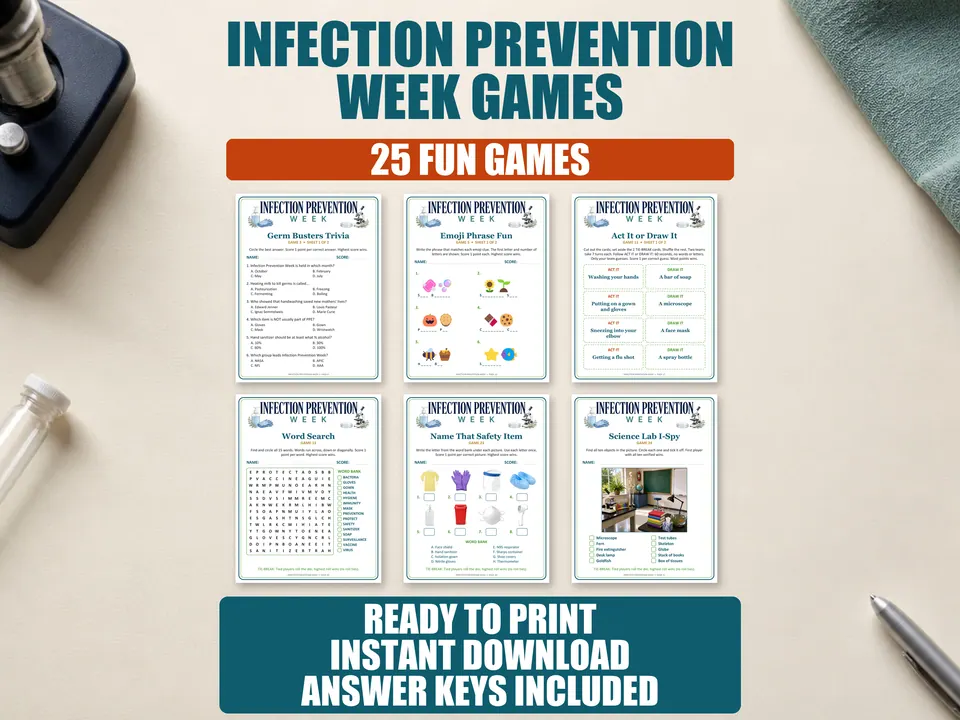
The Infection Prevention Week Games bundle contains 25 printable games, including trivia, fact or fiction, puzzles, picture games, word games and group challenges. For a stop-start break room, read the directions for one seated paper activity first. Germ Busters Trivia, Germ Fact or Fiction, Science Lab I-Spy and Spot the Difference are among the listed options.
It's handy when you want choices for later gatherings without building each game yourself. The Quick Host Guide gives setup and scoring help, and objective games have answer keys, including picture keys. Read the chosen game's own directions before deciding what players need.
Save movement games and group challenges for a gathering that can stay together. A quiet paper activity is easier to hand to someone who walks in between the opening chat and the answer reveal. Would You Rather is unscored, which suits a table that wants conversation without totals.
These games are for celebration; use your workplace's approved materials for training.
Print one sitting, not the whole celebration
Pick the PDF for your paper size, A4 or US Letter. The full-page files have 39 pages each; the two-per-page files have 21. Print the selected activity instead of sending the entire bundle to the printer for every participant.
Full-page files give you the largest text. The two-per-page versions save paper, but some games use two pages and place those together on one sheet. Check the actual player pages before counting copies, because two-per-page doesn't always mean two whole games per sheet.
Print at Actual Size or 100% on white paper or cardstock. The listing recommends color especially for picture games. Put your test copy on the table and read it from a player's seat. If you have to lean over the page, switch to the larger layout.
| Part of the kit | First sitting | Next sitting |
|---|---|---|
| Player pages | Fresh copies for expected players | Separate fresh copies |
| Directions | Host reads before starting | Leave with the next host |
| Objective answer key | Covered until the reveal | Covered again before handoff |
| Recognition note | Name the team being thanked | Address the arriving team too |
Make joining easy and leaving normal
Put a small invitation next to the pages: the activity name, whether people play alone or together, and the stopping point. Someone walking in halfway through lunch should understand the offer without interrupting the table.
For a shared sitting, start together and follow the game's scoring directions. For a drop-in table, say when and where answers will be available. Don't leave the key next to unused player pages while people are still joining.
Ask people if they'd like a partner instead of assigning a public turn. Let the coworker who just wants to sit and chat do exactly that. The activity is the invitation, and the appreciation is theirs either way.
When someone has to leave, collect their page only if they want it collected. Don't call after them to finish a question or wait for a score. A break that ends comfortably makes the next one easier to say yes to.
Hand over a kit the next host can follow
Leave a note on top of the next sitting's envelope with the game title, where its directions are, which key matches it, and how the last group played. Add any practical snag, like needing more pens or moving away from a noisy doorway.
Keep the note about setup, not individual scores. The next shift needs a welcoming start, not a target set by coworkers who had a longer break. If you want friendly competition, run it inside each sitting and follow the chosen game's scoring and tie-break directions.
Count the unused player pages before you leave. Put the key away, restock any missing supplies, and tell the next host the envelope is theirs. Keep the digital files with the organizer; the listing allows printing for your own team, department or event under its single-workplace terms.
Reach the people who never made it to the table
A game can't carry the whole thank-you. Set aside a message for staff who miss every sitting, and arrange for a team contact to pass it on. Give it the same care as the invitation: a name, a concrete contribution and a direct thank-you.
No printable budget? Run a free note exchange. Hand coworkers blank paper and ask them to finish this original prompt: "One thing your team made easier for us was..." Collect the notes and deliver them to the named teams. Keep it optional and let people write privately.
After the final sitting, ask each contact one practical question: did the setup fit the break people actually had? Use the answer to change the timing or setup next time. For a place to store the repeat kit, see the healthcare break-room game station.
Questions and answers
Should I print all 25 games for each shift?
No. Pick one activity and print its player pages, directions and relevant answer key. Keep the full game list with the organizer in case you want a different activity later.
Can the next shift use the same activity?
Yes. Print fresh player pages and leave the host directions with the kit. Keep the answers covered until each sitting finishes so later groups get their own reveal.
Is two-per-page always two complete games on a sheet?
Not always. Some games use two pages, and the two-per-page edition keeps those together on one sheet. Look at your chosen game before deciding how many player copies to print.
What can I do without buying a printable?
Write a specific thank-you card for each team and invite coworkers to add their own notes. Set them out at several break times so appreciation doesn't depend on attending a game.