GoodHolidayStore planning guide
School Psychology Week Lunch Games That End on Time
You've found a lunch slot for the school psychology team, and now you're supposed to fit appreciation, food and an activity into it. Pick one optional game and give lunch first claim on the time. During the week, a short seated round can make the gathering feel special without sending colleagues back to their afternoon hungry. The aim is a welcome pause with a clear finish, even if a puzzle stays unfinished.
Protect the lunch, then add the game
Check when people actually arrive and when the first person needs to leave. Build your invitation around that overlap. A suggested 25-minute window might leave ten minutes to settle and eat, ten for an optional activity and five to wrap up. That's a host schedule, not a promise about game duration.
Write the end time where everyone can see it. If the team arrives late, shorten the activity rather than borrowing time from the next appointment. A lunch that finishes when you said it would is much easier to accept next time.
Don't open with a long round of introductions if colleagues already know each other. Offer one specific thank-you, point out the available seats and let people unpack their lunches. The activity can wait until hands are free.
Match the game to how they arrive
People arriving in waves need a different activity from a group sitting down at the same moment. Choose from that constraint instead of trying to squeeze your favorite format into the room.
| Lunch situation | A sensible choice | Hosting work |
|---|---|---|
| Colleagues arrive at different times | Word Search | Set out sheets and pens |
| Everyone wants a shared seated round | Picture bingo | Prepare a complete caller kit |
| A small group wants conversation | Would You Rather | Read the selected rules first |
| There is barely time to eat | A thank-you note | Skip the game setup |
School Psychology Week Games has 15 activities, including Word Search, Would You Rather and Draw and Pass. For the quiet arrival option, Word Search is on full-page page 31. For a conversation option, Would You Rather is on full-page page 12. Select one, read its instructions and print what you need.
The bundle's four editions contain the same activities: 33-page full-page Letter and A4 PDFs, and 17-sheet landscape two-up versions. Full-page editions give the largest text. Keep the solutions with the host, and print at Actual Size or 100%, using Fit to Printable Area if a border clips.
Pack the kit the night before
Select the activity before selecting supplies
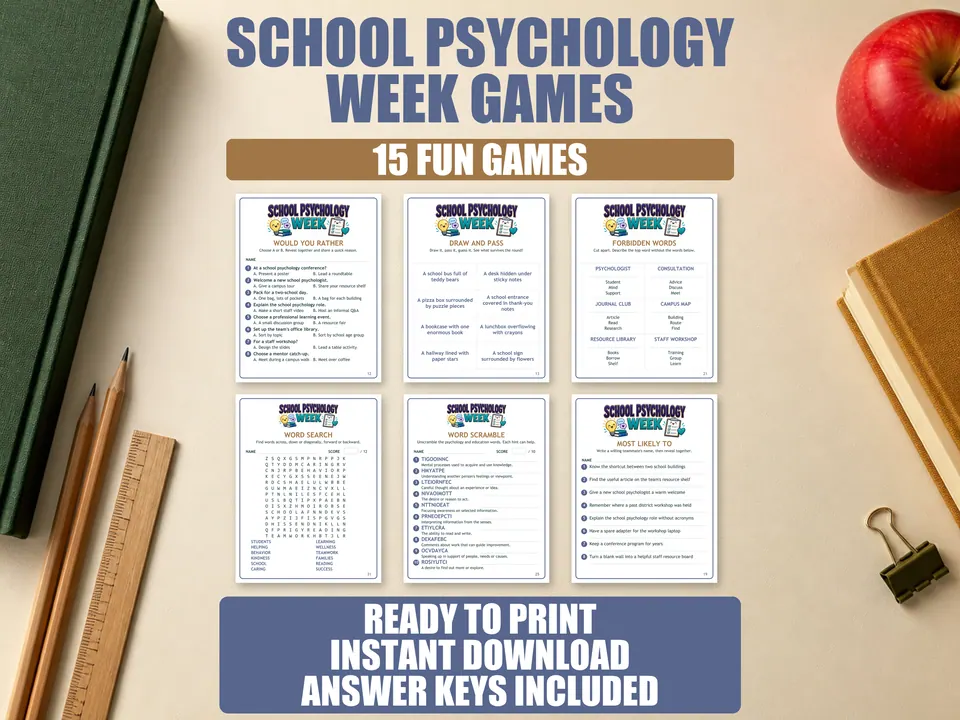
For Word Search, arrange player sheets and pens. For another bundle activity, read its supply list first. Minute to Win It uses prepared desk supplies, and Scavenger Hunt needs a host-prepared shared room. Neither is a last-minute substitute for a missing pen. Choose a seated option if preparation time is tight.
If your group wants bingo, School Psychology Bingo gives you 50 different boards and 36 matching picture calling cards. Familiar pictures include Clipboard, Tablet, Laptop and File Folder. Players match the shown illustration; you don't need to invent psychology questions or turn the lunch into a knowledge check.
Count chairs and print different boards
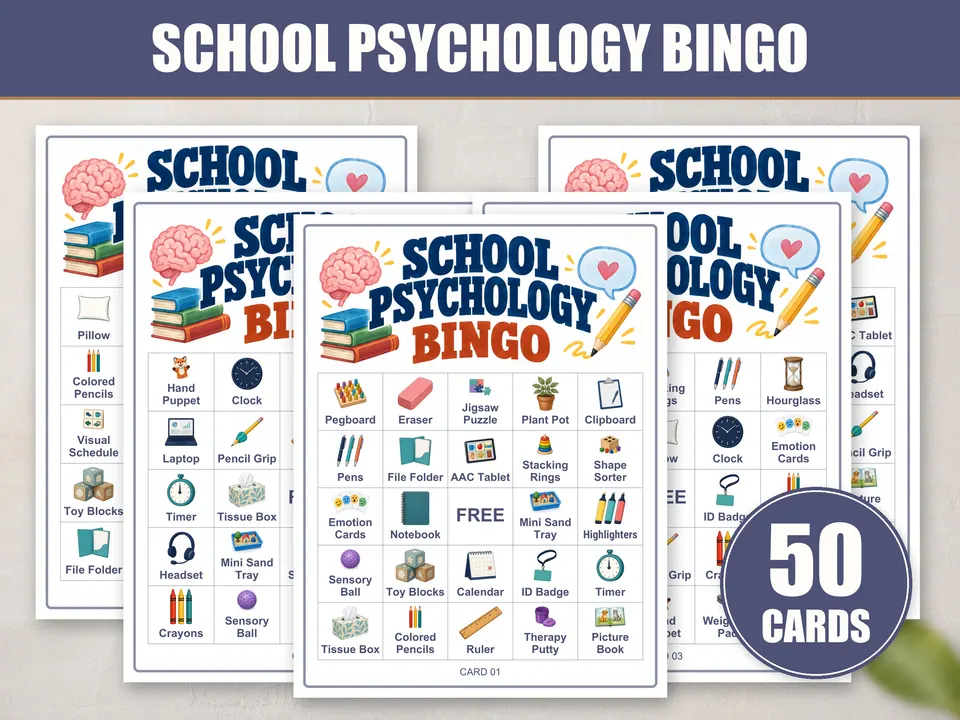
Print one different board for each player and prepare enough removable markers. Choose one-per-page boards for a larger playing surface or the supplied two-per-page edition for smaller cards. All four paper/layout files contain the same 50 boards. You don't need to print every board for a six-person table.
Cut the full calling set and bring the checklist
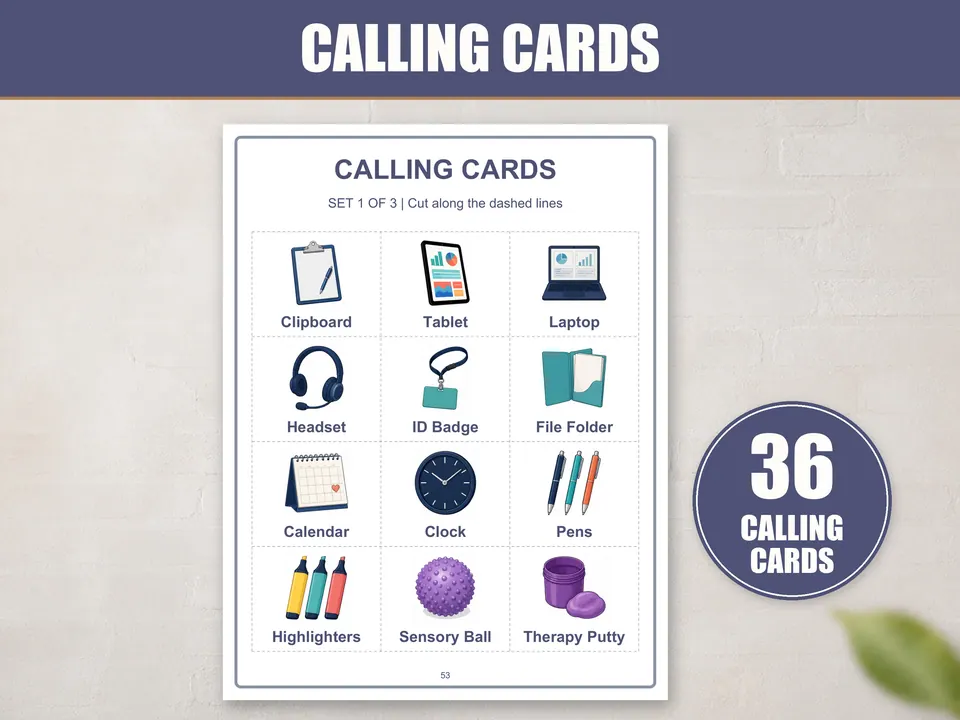
Prepare all 36 calling cards before lunch. Put the checklist and a pen beside them. Separate drawn cards from the undrawn pile during play. The included token sheet has 36 markers for one player, so copy it for additional players or bring your own removable markers.
The complete bingo editions have 58 full-page pages or 29 landscape sheets. Those totals include the full set, not just your table's boards. The already paired two-per-page PDF should print with Pages per Sheet at 1. Check one sample and cut the center guides before people arrive.
Run a round that fits inside lunch
For bingo, mark the FREE centers and agree on a row, column or diagonal. Shuffle the whole calling set. Show one card at a time, read its exact label and let players find the matching picture. Tick the checklist and keep every drawn card for checking a claim.
If someone calls bingo, compare their claimed pattern with the drawn pictures. Share simultaneous wins. If you reach the announced finish time first, close the round without inventing a rushed replacement rule. You can say, "We'll leave it there so everyone gets back on time."
For a puzzle sheet, let people work alone or compare with a neighbor. Don't call for scores while someone is still eating. Offer the answer key when asked or at the end, rather than turning the sheet into an assessment.
The good moment is a colleague finishing a bite, spotting a picture and joining the round without needing the rules repeated. The difficult moment is when a late start triggers a frantic rush through every planned activity. Drop the extra activity. You only promised a pleasant lunch.
Thank the people who skipped lunch
If you have no printing budget, write a free original prompt on blank paper: "One small thing a colleague did that helped my day was?" Invite people to write a private note. They can hand it over later, and anyone can pass. Model a routine workplace kindness without using student names or discussing student situations.
Set aside thank-you notes for absent colleagues too. Don't ask attendees to tell a revealing work story as the price of recognition. Keep conversation about the people at the lunch and what would make their break pleasant.
Before leaving, collect reusable bingo markers and put the complete calling set back together. Keep purchased files with the organizer. For another gathering, printing options can help you choose layouts, while quiet-team icebreakers offer another way to begin without a performance.
Questions and answers
Are these activities for students?
This lunch plan is for adult school psychologists and their colleagues. The bundle listing describes an adult staff appreciation gathering; do not assume every activity suits a student group.
Which bundle game needs the least explanation for quiet arrivals?
Word Search gives people a seated sheet they can start individually. Keep pens nearby and make completion optional. If everyone wants to talk together, read the Would You Rather instructions before choosing that route.
Can I start a scavenger hunt straight from the packet?
The listing says Scavenger Hunt needs a host-prepared shared room. Check and prepare that space first, or choose a seated activity for a simpler lunch setup.
Can we reuse bingo next time?
Yes. Use removable markers, clear the boards and reshuffle all 36 calling cards. Keep the host kit together so the next organizer can find every piece.