GoodHolidayStore planning guide
Case Management Week When Nobody Shares a Lunch
Your case managers share a job title, but apparently not a lunch hour. Build Case Management Week around a quiet activity people can join separately, then add a hosted game only if a real group can gather. Start with personal thank-you notes and spend on a printable only if it saves you preparation. The person who never reaches the game table still belongs in the celebration.
Plan around arrivals, not the sandwich order
Ask colleagues when and where they usually take a break. You don't need a detailed schedule of everyone's day; you need to know whether the table gets one group, a stream of individuals or hardly anyone at all. Pick the format from that answer.
If most people arrive separately, give them one page they can understand without a spoken introduction. If a small group reliably shares a break, offer one hosted round then. Don't announce a team tournament first and spend the rest of the week trying to assemble the team.
| What your breaks look like | Start here | Organizer's job |
|---|---|---|
| One or two people arrive at a time | A selected quiet puzzle | Put directions and answer-check details beside it |
| A group can stay together | Picture bingo | Prepare the calling kit and name a host |
| People work in different locations | Recognition notes delivered directly | Track delivery rather than attendance |
| Almost nobody has time | A short personal thank-you | Leave out the game without leaving anyone out |
Keep the invitation brief. Give the location, available window and answer-check arrangement. "Optional puzzle by the break table; answers after the last lunch" tells people more than a long message about team spirit.
Give the quiet table one clear job
The Case Management Week bundle includes 25 themed games, including puzzles, picture games, I-Spy, Spot the Difference and word games. It also supplies a Quick Host Guide, game directions and answer keys for objective games. Inspect the pages and choose one activity that suits people arriving alone or in pairs.
Put the selected player page at the front, with pens and a short sign. Explain whether players keep their sheets, leave them in a tray or check answers later. Put the key somewhere separate, so the first person doesn't accidentally reveal it to the next arrival.
Start with one activity for the whole day. Colleagues taking later lunches can try the same page without needing to know what happened earlier. If the team asks for another activity tomorrow, you can select it then. You don't need a different challenge for every break window.
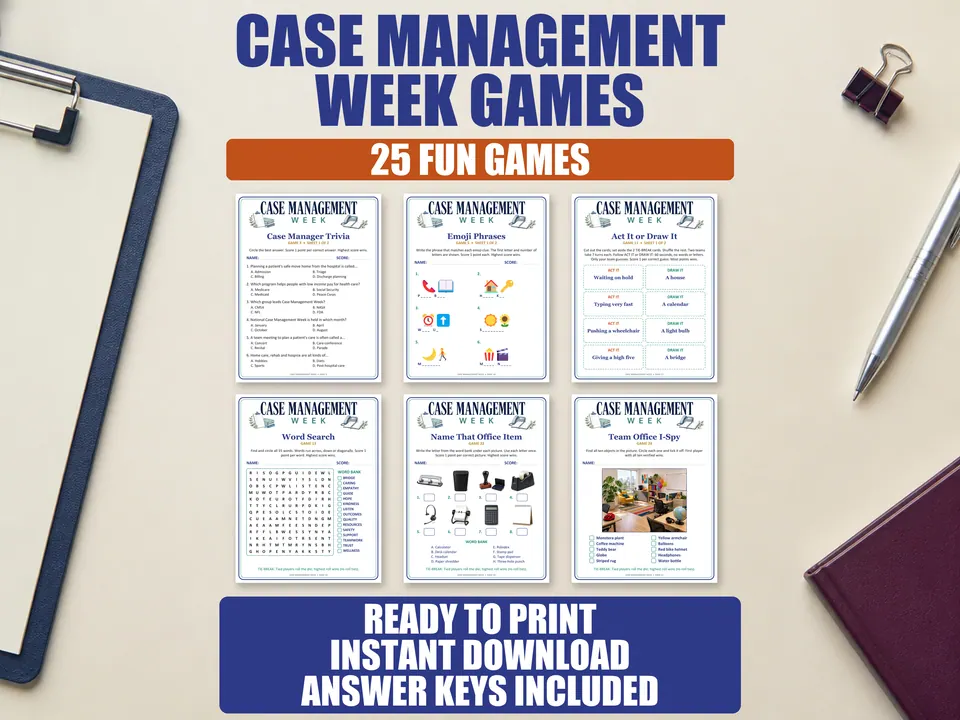
Avoid asking the table to run itself by guesswork. If you won't be nearby, write down who can answer a rules question or where the host instructions are. A page with no directions is just more paper on a busy table.
Save bingo for a group with a caller
Case Management Bingo includes 50 illustrated player cards with a center FREE space and 36 matching picture calling cards. It comes with a caller checklist, host guide and token sheets. Choose it when colleagues can sit together and one person can stay to host.
Give each player a different board and follow the included instructions for the winning pattern and checking a bingo. Show and read calls so the whole table follows the same round. Keep the drawn calls available for checking rather than dropping them back into the unused pile.
The token quantities differ by edition: full-page editions have 25 markers per sheet, while two-per-page editions have 50. Count what your group needs before printing extra sheets, or use removable markers you already have. Don't assume one token page will supply the entire table.
If someone arrives halfway through, invite them to watch and join a fresh round. Catching up on calls while eating lunch isn't the break you were trying to offer.
Spend paper on players, not unused pages
The activity bundle has 39-page full-page PDFs for A4 and US Letter, plus 21-page two-per-page PDFs for each paper size. Choose one edition and select the pages for your chosen activity, including any instructions or key the host needs.
Bingo's full-page A4 and Letter editions have 58 pages each; its two-per-page editions have 33. The board count is 50, so that PDF page total isn't a count of different player boards. Select the player pages you need and the supporting materials.
For a tiny budget, skip decorations and prizes. If you already have suitable paper and pens, use those. Tell colleagues the activity is an optional shared break, with no purchase or prize contribution expected from them.
Deliver the recognition beyond the game table
Write one specific thank-you for each person. Name a helpful action: a clear handoff, patience with a new teammate or help finding the right contact. Keep the note focused on the colleague rather than including identifying details about someone else's situation.
Invite peer notes as a free addition. A blank card and the prompt "Thanks for helping me when you..." are enough. Deliver them privately unless both people want them displayed.
Keep a simple delivery list for staff at other locations or working later. Don't use game scores or completed activity sheets to decide who gets a note. At the end of the week, the task to finish is making sure the thank-you reached every colleague.
Questions and answers
Can we celebrate without buying a printable?
Set out blank appreciation notes with a specific thank-you prompt, then deliver them to the people named. Add a message from the manager for each colleague so recognition doesn't depend on how many notes arrive.
Does the bundle include answers?
It includes answer keys for objective games, including picture keys. Open activities use their own directions, and Would You Rather is unscored, so check the selected page before choosing your scoring plan.
Is case management bingo something people fill in alone?
This product is a picture-matching game with a host and calling set. Reserve it for a shared gathering rather than leaving boards out as an unattended checklist.
What if somebody only has time to take a page?
Let them take a printed activity and tell them where they can check the answers later. Give them their thank-you note at the same time, so they don't have to finish the game to receive recognition.